
Water cutting
Partners within water cutting


WE WORK WITH THE WORLD'S LEADING MANUFACTURERS OF MACHINES FOR WATER CUTTING
Qtec supplies water cutting and waterjet cutting equipment to industrial companies in Denmark and abroad. The solutions are used for a wide range of applications, from detailed metal processing to the processing of softer materials such as rubber or foam.
The range includes water cutting machines, high-pressure pumps and components for production plants where materials are processed with water under high pressure.
We work with the world's leading manufacturers of waterjet cutting machines, such as JetEdge, Hypertherm / Accustream, Flow and Allfi. This allows QteC to supply equipment for both new installations and upgrades of existing waterjet cutting machines. This includes high-pressure pumps, cutting heads, orifices, mixing tubes and other components for waterjet cutting.
WATER CUTTING FOR METAL, STONE AND INDUSTRIAL PRODUCTION
Waterjet cutting is used in a wide range of industries. The method is used for cutting metal, aluminum, stone, glass, plastic, rubber and composite materials, among others.
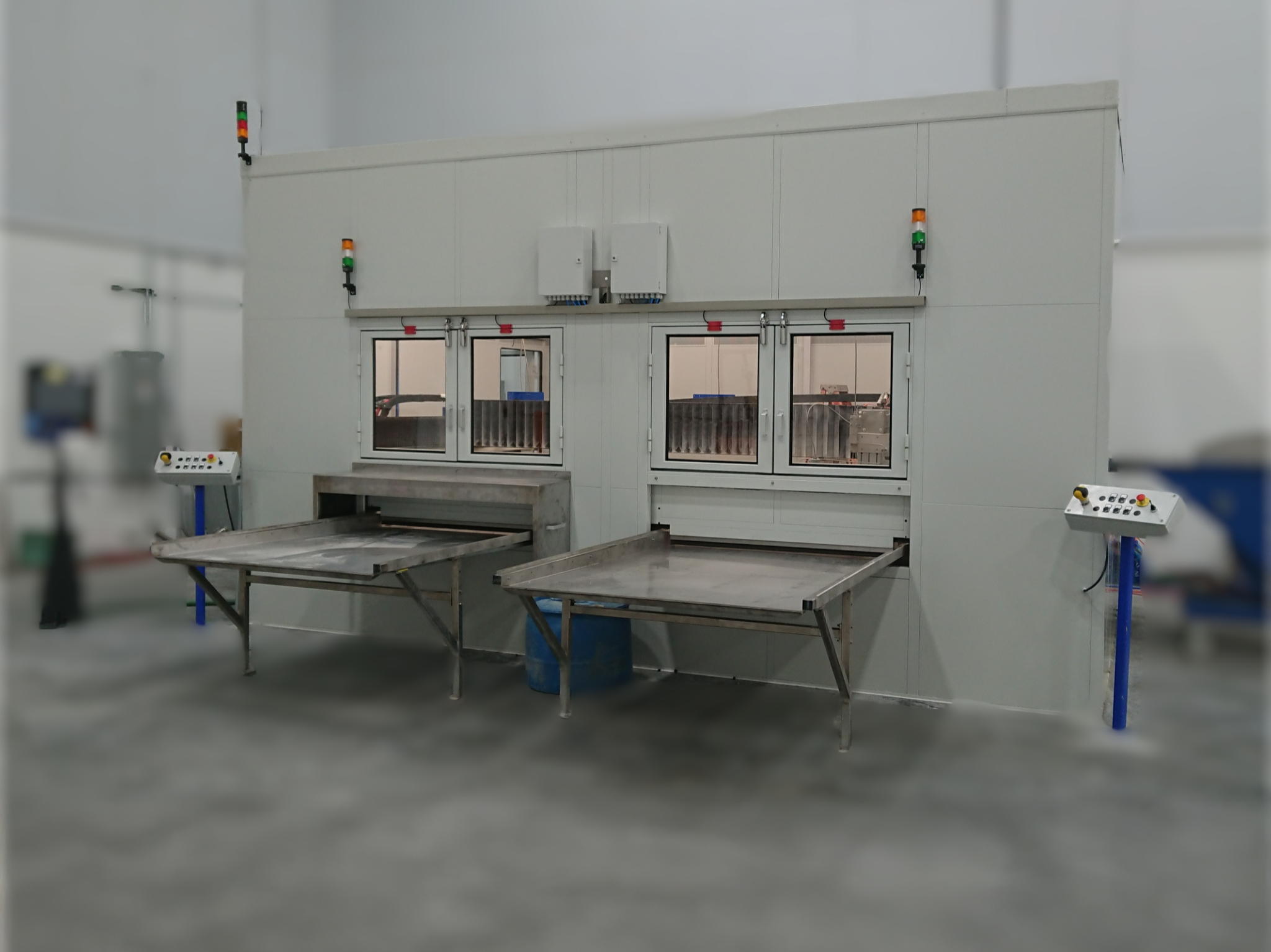
Waterjet cutting machines can be part of both stand-alone production cells and automated systems where multiple cutting heads work simultaneously.
Qtec supplies both complete waterjet cutting machines, high-pressure pumps and technical components for waterjet cutting. In addition, we can assist with the construction of new plants or the upgrading of existing machines.
What is water jet cutting?
Waterjet cutting is a method where ordinary tap water is used under high pressure to cut materials. The water is pumped up to a pressure of around 4,000 bar and directed through a small opening in a cutting head. This creates a high-velocity water jet that is capable of gouging out almost any type of material.
There are two primary waterjet cutting systems:
- Cutting with clean water
- Cutting with water added with abrasive (Abrasive water cutting)
The two types of waterjet cutting:
- Clean water
Typically used for soft materials such as rubber, plastic, paper and foam.
- Water with abrasive
Used for harder materials such as metal, stone, glass and ceramics.
In waterjet cutting, the material is fed under the cutting head on the machine's table, where the water jet cuts the workpiece into the desired shape. The method is used in both small series and larger productions, where the machines work continuously.
Waterjet cutting is used for, among other things:
- Aluminum
- Stainless steel
- Steel
- Stone
- Glass
- Plastic
- Rubber
- Composite materials
- Foam
The method is used in many industries, including the metal industry, stone industry and the production of technical components.
Waterjet cutting in practice
Waterjet cutting is used today in a wide range of production environments. The technology is used for metalworking, stoneworking and cutting technical materials.
Waterjet cutting machines can operate with multiple cutting heads simultaneously and be part of automated production lines. The systems can be equipped with high-pressure pumps, abrasive dosing systems and CNC control that controls cutting paths and positioning.
Qtec works with both the installation of new waterjet cutting machines and the delivery of components for existing systems. We deliver, among other things:
- High-pressure pumps for waterjet cutting
- Cutting heads
- Orifices / nozzles
- Mixing tubes / jet tubes
- Valves and high-pressure components
- Spare parts from JetEdge, Hypertherm /
- Accustream, Flow, Allfi and KMT
The equipment is used in both single machines and larger production plants, where waterjet cutting is part of the processing of materials.
Qtec is your partner in waterjet cutting and delivers solutions based on many years of experience and collaboration with leading players in the industry. Our equipment and systems are designed to strengthen your production, optimize workflows and handle specific industry requirements, so you achieve stable and reliable processing of your materials.
Waterjet cutting in metal
Waterjet cutting is used in many industrial processes for detailed metal processing. The method is used for aluminum, stainless steel, steel plates and other metal alloys, among others.
Waterjet cutting cuts the material with water under high pressure. When cutting metals, an abrasive is always added to the waterjet, as pure water cannot cut these materials. This makes it possible to process materials such as steel and stainless steel.
Water cutting machines are used in both single-piece and series production, where workpieces are cut directly from sheets or other raw materials.
Waterjet cutting in stone and glass
Waterjet cutting is also used in the stone industry for materials such as granite, marble and ceramic slabs. The method is also used for glass in industrial applications.
Waterjet cutting allows materials to be processed without generating heat in the workpiece. Therefore, the method is often used for materials where other cutting methods can present challenges.
Water cutting machines are used, among other things, in the production of components, plates and special parts in stone and glass.
Waterjet cutting in plastics and composite materials
Water cutting is also used for materials such as plastic, rubber, foam and various composite materials.
When cutting these materials, clean water is often sufficient. The method is suitable because the materials can be processed without the use of heat, which is an advantage in cases where other cutting methods can be challenging. It is used for technical plastics, gaskets and various industrial components, among other things.
Waterjet cutting machines are used in both development tasks and production, where materials are processed directly from sheets or blocks.
See our references


 English
  Danish